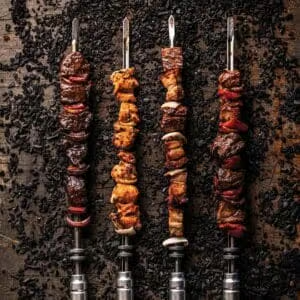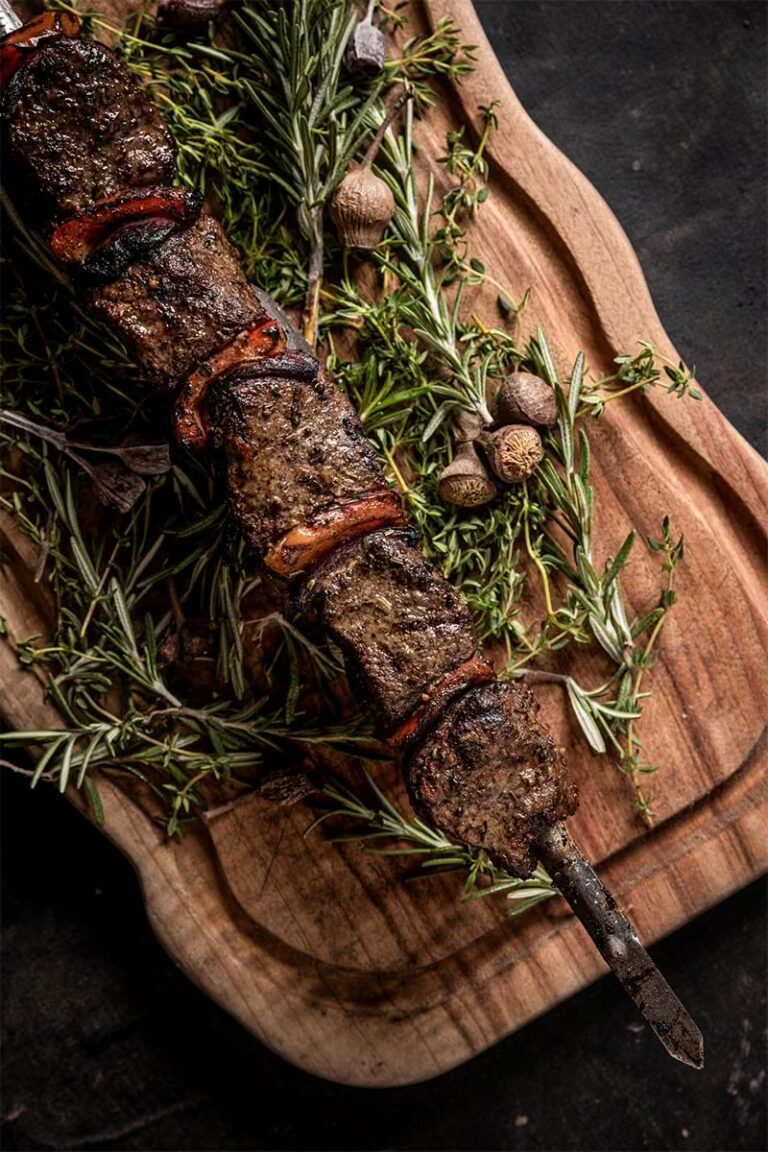
Lamb skewers are a dish we take pride in at Hunter & Barrel. They’re the perfect dish for a summer barbecue, a dinner party, or just a weeknight meal. They’re simple to make, forgiving of the heat, and ridiculously delicious. When cooked over an open fire, lamb skewers are tender, rich, and absorb the mouthwatering smoky flavour of the flame.
This guide covers everything you need to know about how to make lamb skewers, from choosing the right cut to understanding flavour pairings and timings, giving you the confidence to cook on the grill.
Choosing the Right Lamb for Skewers
A great lamb skewer starts with the right cut. Different parts of the animal vary in tenderness and cooking times, so selecting the right piece can make or break your skewers.
Understanding Different Cuts and Their Benefits
The most common cut of lamb for skewers is the leg, but other cuts like lamb backstrap or lamb loin also work. Lamb leg is slightly leaner than most cuts, cooks quickly, and handles high heat well, making it the most popular cut for skewers. Lamb loin, on the other hand, is very tender, but comes with a hefty price tag and involves a different preparation process.
Tips for Buying Quality Lamb
For the best lamb skewers, it’s best to get your produce from a butcher. Ask for a boneless lamb leg, and ensure that the lamb looks fresh and has a touch of marbling. What to look for? A bright red colour, nice white fat, and firm to the touch. If you’re unsure about something, ask your butcher, that’s what they’re there for! For a cheaper option, you could buy a bone-in lamb leg, but remember, you’ll have to debone it and trim the fat yourself.
Preparing Lamb Skewers for Cooking
Preparing your lamb correctly sets you up for the next step. Cutting, seasoning, and marinating significantly affect the final result, so it’s crucial to take your time and do it right.
Cutting Lamb for Even Cooking
The key here is uniformity. Uneven pieces make it difficult to know how long to cook your lamb skewers. For boneless lamb leg, cut into 3 cm cubes, trimming any excess fat and sinew as you go. A fridge-cold piece of meat and a sharp knife make this process a lot easier.
Marinating and Seasoning Tips
Lamb skewers can be as simple or complicated as you like. A classic Middle Eastern-style is guaranteed deliciousness. Place your lamb pieces into a bowl, and to it add:
- Lemon, juice and zest
- Olive oil
- Freshly minced garlic
- Dried oregano
- White or sherry vinegar
- A pinch of salt
Mix thoroughly with washed hands, and let sit for a minimum of 30 minutes, but preferably overnight.
Cooking Lamb Skewers: Methods and Timing
Knowing how long to cook your lamb skewers depends on the cooking method you’re using. They’re best cooked medium-rare to medium, but the time to get there will vary between a grill, BBQ, or pan.
Grilling Lamb Skewers
For an electric or charcoal grill, ensure you have a high-heat and low-heat zone set up. Start the skewers over high heat to develop a smoky, charred crust, about 1.5–2 minutes per side. Then. move them to the low-heat zone to finish, using a thermometer to monitor the internal temperature until they reach about 57–60ºC.
BBQ Lamb Skewers
Similar to the grill, set up your heat zones, then start over high heat for colour, then move over to low-heat to finish. After the internal temperature reaches about 57–60ºC, remove from the BBQ and let rest for 5–10 minutes, until they come up to about 63–67ºC, or medium-rare to medium.
Oven or Pan-Cooked Lamb Skewers
If you don’t have a grill or just don’t want to go through the process of setting it up, lamb skewers are still delicious cooked in the oven or on the stove. For pan-cooking, preheat a heavy cast-iron or griddle over medium-high heat, add a couple of tablespoons of olive oil, and lay the skewers away from you. Cook for 1–2 minutes per side, then lower the heat and cook until up to temperature.
Roasting is even easier. Simply preheat the oven to 230ºC with a rack set over a roasting pan. Once hot, place your lamb skewers on the rack, with a bit of space between each. Roast for 10–12 minutes, turning halfway through. Optionally, baste with leftover marinade or drippings for a juicier result.
Serving and Enjoying Lamb Skewers
Lamb dishes like these Middle Eastern-style skewers pair beautifully with flatbreads, grilled vegetables, pickled onions and cucumbers, fresh herbs like dill and rosemary, and creamy yoghurt sauces. For delicious make-it-yourself souvlaki, serve the lamb with warm pita bread, tzatziki, sliced tomatoes, pickled onions and some lemon wedges. Either serve the lamb on the skewer, or slide the meat off and finish with a dash of olive oil and fresh herbs.
Common Mistakes When Cooking Lamb Skewers
The most common mistake with lamb is overcooking it. While lamb is more forgiving than beef or chicken breast, it tightens up quickly past medium, giving it a slightly chewy texture. To prevent this, use a meat thermometer, and pull the skewers a few degrees below your preferred doneness, as they will continue to cook off the heat.
Aside from that, ensure your meat is well-seasoned with herbs and spices. If your marinade includes any sugar or honey, ensure you wipe excess off the meat before cooking, as you risk the sugars burning.
A Taste of the Hunter, Without the Work
Cooking lamb skewers over the fire at home takes a bit more time and effort than the stovetop, but the payoff is always worth it. It’s something we’ve mastered at Hunter & Barrel, where food, atmosphere, and theatre come together seamlessly.
In our open kitchens, the scent of smoky meat carries through the restaurant as chicken thighs, lamb shoulder, and wagyu skewers cook over the roaring hot coals, served piping hot and ready to share.
Book your table at Hunter & Barrel and enjoy our signature charcoal-grilled menu, cooked over fire and prepared with love and care.